
Lymphedema Therapy
Specialized care to reduce swelling in any area of the body that may have developed gradually or after cancer treatment or surgery.
Our Approach
A Plan Built Around You
Lymphedema is different for everyone. We start by learning your history and measuring the swelling, then build a plan that fits your body and your life. Our goal is to reduce swelling now and teach you how to manage it long term.
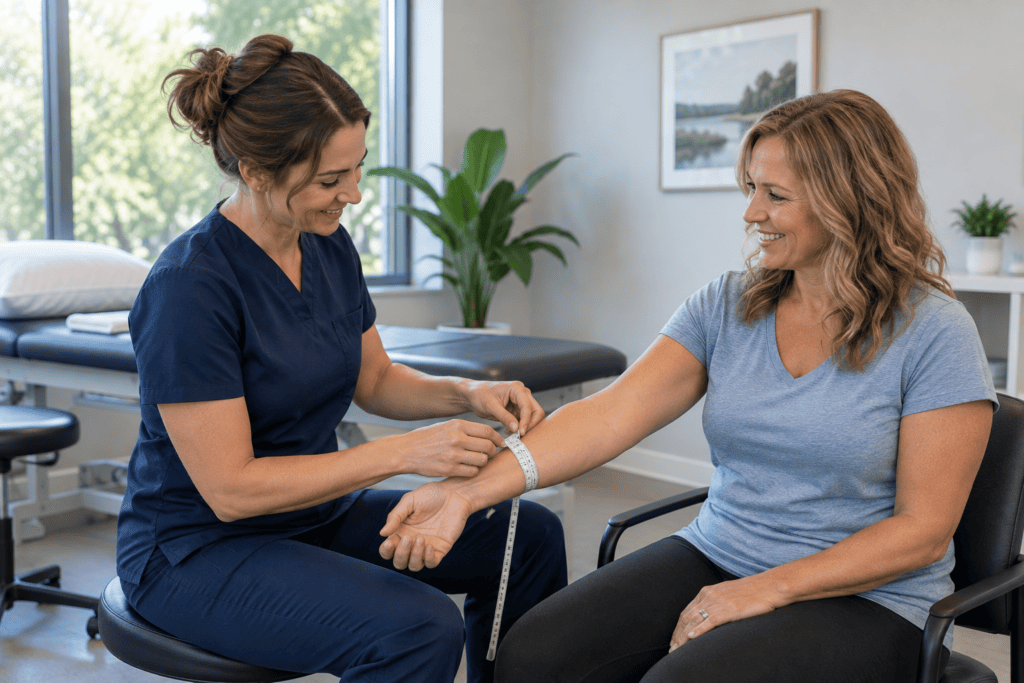
What to Expect at Your First Visit
Your History:
We talk about your medical history and when the swelling started.
Measurements:
We measure the affected body part(s) so we can track your progress.
Gentle Treatment:
Many patients start with manual lymphatic drainage, a light massage technique.
Your Home Plan:
You leave with exercises, skin care tips, and compression guidance
What We Help With
Find your area below to see the conditions we treat most often.
Arm swelling after breast cancer treatment
Removing or radiating lymph nodes can make it harder for fluid to drain from the arm. We use gentle hands-on techniques, compression, and exercise to reduce swelling and help prevent it from getting worse
Leg swelling
Swelling in the legs or feet can come from lymph node removal, pelvic cancer treatment, or other health conditions. We help reduce the swelling and make daily activities like walking and standing more comfortable
Swelling after surgery or injury
Some swelling after surgery is normal, but when it lingers, it can slow your recovery. We help move fluid out and get you back to normal activity.
Compression garments and bandaging
The right compression makes a big difference. We will discuss many compression options and together decide what will work best for your symptoms and lifestyle.
Ongoing management and flare-ups
Lymphedema is often long-term, but it can be managed. If your swelling comes back or gets worse, we help you get it under control and adjust your home routine.
Other Ways We Can Help
Pelvic health is one part of the care we offer. We also provide general physical therapy and specialized lymphedema treatment.
General Physical Therapy
Hands-on care for back, neck, shoulder, knee, and other injuries, plus recovery after surgery.
- Back and neck pain
- Shoulder, knee, and hip injuries
- Post-surgical rehab
- Sports and work injuries
Pelvic Health
Private, one-on-one care for bladder, bowel, pelvic pain, and pregnancy-related concerns.
- Pelvic pain
- Incontinence
- Prenatal & postpartum
- Post-surgical recovery
What Happens After Lymphedema Therapy?
Staying active is one of the best ways to manage lymphedema. When therapy ends, our strength and performance programs help you build strength safely and keep moving with confidence.
Before You Come In
Do I need a referral?
Michigan allows you to begin physical therapy without a physician referral for up to 10 visits or 21 days, whichever comes first. However, insurance plans generally require a referral in order to pay for physical therapy. If you plan to use insurance, we recommend obtaining a referral before starting. Contact us if you’re unsure and we can help determine what your plan requires.
What should I wear?
Wear loose, comfortable clothing that lets us easily reach the affected arm or leg. If you have compression garments, bring them with you.
How long does treatment take?
It depends on your swelling and goals. Some patients come several times a week at first, then less often as they learn to manage it at home.
Will I need to wear compression?
Most people with lymphedema benefit from compression. We’ll help you understand what you need and how to wear it.
Ready to Feel Lighter and More Comfortable?
Most new patients are seen within 48 hours. Serving Haslett, East Lansing, Okemos, and the greater Lansing area.